
A CMVM-regulated agriculture fund offering a path to residency within the EU, and a real return on capital you keep.

For a qualifying €500,000 investment, an international family gains Portuguese residency (and, in time, an EU passport) without relocating.
The question sophisticated investors ask is simple: where should that €500,000 actually sit? Pela Terra's answer is productive, water-secure agriculture: permanent crops and operating agricultural businesses the world needs more of every year, dislocated from public markets, that have outlasted every cycle.
Since residential real estate was removed as a qualifying route in 2023, investors have been left choosing between options that each give something up.
A €250,000 contribution to heritage or research secures residency, but the money is gone. There is no asset and no return.
Most qualifying funds are weighted to the volatile Portuguese stock market or early-stage venture. Residency, yes, but with real capital risk.
Productive agricultural operations that have historically preserved capital through downturns, generate operating income, and qualify for the Golden Visa.
Pela Terra was built to deliver residency and capital preservation and a real return, not one at the expense of the others.
Pela Terra invests in productive agricultural systems in Portugal: permanent crops, water-secure production, regenerative management, processing infrastructure, and renewable energy. The strategy is designed to generate returns from operating agriculture while improving the resilience and long-term value of the assets that support it.
The underlying asset class is one institutions hold for a reason. It behaves unlike stocks or bonds, drawing on durable food demand and water-secure production: it held its value through the 2008 crisis, the eurozone debt crisis, COVID and the inflation shock that followed the war in Ukraine.
Source: NCREIF Farmland Property Index; S&P 500, annualised 1992–2025 (Damodaran, NYU Stern). Farmland volatility 6.8% vs 17.6% for the S&P 500; near-zero correlation to equities (r = −0.10). Indices are unmanaged and not investable; figures represent the index, not Pela Terra fund returns. Past performance is not indicative of future results; capital is at risk.
Markets move in cycles, and after a long expansion many investors are positioning for the next downturn. The case for productive agriculture rests on one fact: the asset class has protected capital precisely when equities have not. In the 2008 financial crisis (and again in the 2020 crash) agricultural land kept rising while stock markets fell.
Portugal makes the point at home. Through its own 2011 sovereign-debt crisis, the Alentejo's transformation into irrigated agricultural production accelerated, and Portuguese agricultural land has appreciated steadily since, the discount to Spain narrowing from roughly four-fold to about 25–30%.
Sources: NCREIF Farmland Index (U.S. farmland 15.8% total return in 2008 vs the S&P 500's −37%); Savills Global Farmland Index (11% over the five years to 2012, spanning the financial and eurozone crises). Indices are unmanaged and not investable; figures represent the indices, not Pela Terra fund returns. Past performance is not indicative of future results; capital is at risk.

The Alqueva scheme (Europe's largest man-made reservoir) has turned the Alentejo into ~130,000 ha of newly-created irrigated agricultural land, engineered to supply water through several consecutive years of drought. As water grows scarcer worldwide, this security strengthens as a decisive competitive advantage.
Comparable Spanish land once traded at four times Portuguese values; that gap has narrowed to roughly 25–30% and is still closing. Buying world-class, water-secure land before that gap closes is the real value on offer for investors.
The 7th most peaceful country globally (2026 Global Peace Index), with a transparent legal system, and the residency programme that makes the whole structure possible.
Pela Terra has deployed 100% of capital into rural Portugal — reversing decades of underinvestment in one of Europe's most promising, and overlooked, agricultural regions.
Water-secure agricultural assets within Europe's largest irrigated zone, fed by the Alqueva reservoir, form the foundation of the portfolio — supporting permanent crop production, operational income, and long-term resilience.
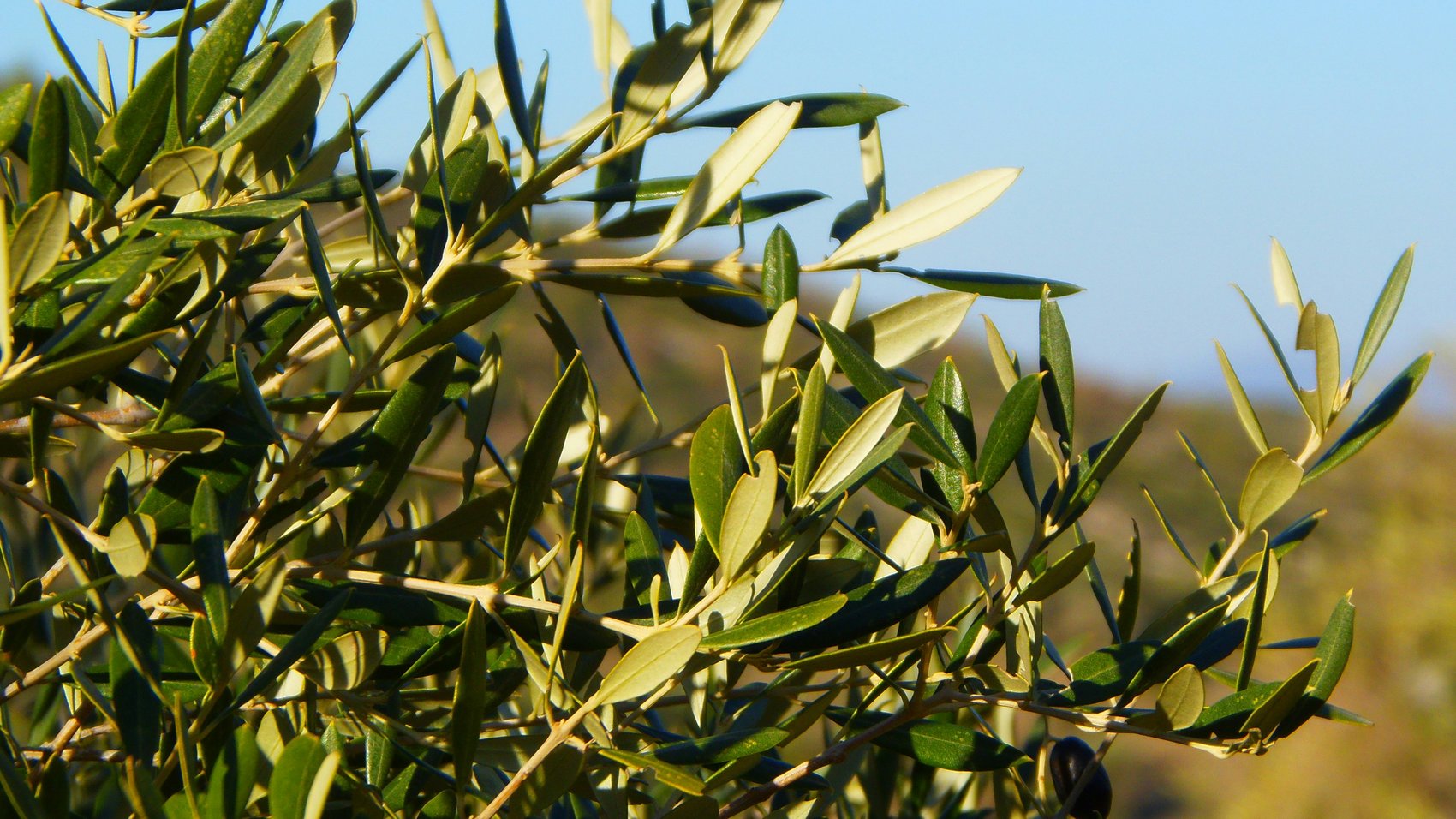
The core income engine. Regenerative orchards across olives, almonds and berries, with independently-verified appreciation.
Olive-oil and almond processing in-house, capturing additional margin from the same harvest.
Removes energy-price exposure, generates grid-export income, and creates a leasable infrastructure asset.
Indicative target allocation; a visual estimate, subject to change in line with the fund documentation.
Across our first two vintages the model is delivering on the three fronts it was designed for — preserving capital in productive agricultural assets, producing real agricultural yield, and creating measurable impact.
Alentejo agricultural land, thanks to its world-class irrigation, is appreciating faster than less-irrigated and non-irrigated regions, supporting the long-term value behind the operating assets as climate change becomes a bigger factor.
Brownfield olive, almond and berry orchards are yielding in line with plan. We are bullish on all three for the decade ahead: almonds gain as California supply falls, olive-oil prices rise as Spanish rain-fed systems reduce supply, and berries remain a high-value growth crop.
The first fund to earn carbon credits across its orchards, and the first operator to deploy whole-orchard recycling — avoiding hundreds of thousands of tonnes of CO₂ while rebuilding soil health — turning carbon capture into a multi-million-euro revenue stream.
Past performance is not indicative of future results and capital is at risk.
You make one choice, in 2032. Hold longer for a higher target return, or exit earlier for liquidity sooner.
Indicative timeline; projections are subject to government processing times and approvals, and to the immigration law in force at the time of application.
Target returns only. Targets are objectives, not guarantees of future performance. Capital is at risk and past performance is not indicative of future results.
The portfolio produces operating income each year and builds long-term value over the hold. Investors come first.
A preferred return accrues to investors before the manager participates in investment profits.
Above the relevant threshold, annual income is shared primarily in favour of investors.
Capital gains at exit are shared according to the fund waterfall set out in the fund documentation.
Investors receive a preferred return before the manager participates in investment profits. Above the relevant threshold, annual income is shared primarily in favour of investors, with additional participation by the manager only after investor priority returns have been met. Capital gains at exit are shared according to the fund waterfall set out in the fund documentation.
Summary only. The fund documentation prevails in all cases. Targets are objectives, not guarantees; capital is at risk and past performance is not indicative of future results.
| Class | Unit | Minimum | GV eligible | Distributions | Subscription | Management | Hurdle | Investor share above 5% |
|---|---|---|---|---|---|---|---|---|
| A | €50,000 | €350,000 | Yes | Annual & exit | 0% | 1.5% | 4% | 90% annual · 50% at exit |
| B | €50,000 | €350,000 | Yes | At exit only | 0% | 1.5% | 4% | 90% annual · 50% at exit |
| C | €50,000 | €200,000 | Yes | Annual & exit | 1.25% | 1.5% | 4% | 90% annual · 50% at exit |
Above 5%, the great majority of annual income flows to investors, and the manager earns more only when you do.
A Golden Visa application requires a minimum investment of €500,000.
Class B distributions accumulate and are paid in full at fund liquidation, for investors who prefer growth over income.
Subject to the fund documentation, which prevails in all cases. Capital is at risk.
For US families, the structure is designed to support your own tax reporting and to avoid pulling your wider portfolio into a foreign tax net.
Pela Terra III intends to provide U.S. investors with the annual PFIC documentation required to support their own tax reporting. U.S. tax treatment depends on each investor's individual circumstances, elections, and wider tax position. Investors should consult their own U.S. tax adviser.
You never need to become a Portuguese tax resident — not to invest, not to qualify, and not even after citizenship. Your worldwide income stays outside the Portuguese tax net.
That makes this one of the only routes to an EU passport that never requires Portuguese tax residency — securing your family's optionality. The tax outcome for your wider portfolio depends on your own circumstances and advice.
Leave returns to accumulate inside the fund: no annual distribution, no annual taxable event, paid in full at exit.
Take your returns as cash each year: steady income, distributed annually, for investors who want the yield in hand.
Provided for general information only; this is not tax or legal advice. PFIC/QEF treatment, elections and reporting depend on your individual circumstances — consult your own US tax adviser. Capital is at risk.

Regenerative practices are not cosmetic — they are what make the revenue resilient and the investment safer. Healthier soil produces higher yields at lower cost, reduces dependency on chemical inputs, and builds long-term land value that conventional farming erodes. The same capital does double duty: carbon capture with Terra Madre, on-site solar and biodiversity restoration across every hectare, while 100% of it is deployed into rural Portugal, creating skilled jobs and reversing decades of underinvestment in the region.
Independent ecological assessments by NBI. Aligned with UN SDGs. Data across Pela Terra I & II. Full impact reporting at impact.pelaterra.com
Impact is tracked against fund-level KPIs aligned with the UN Sustainable Development Goals. Several 2030 targets are already achieved — with two standout early results in soil and biodiversity.
Rebuilding the carbon that decades of intensive tillage stripped from the ground.
Our 2030 target was a 30% reduction — we are already comfortably beyond it.
Source: Pela Terra 2025 Impact Report, tracked against 2030 KPIs aligned with the UN Sustainable Development Goals. Figures describe Pela Terra I & II. Targets are objectives, not guarantees; capital is at risk.
A market-leading concierge service, provided free to every investor.
Introductions to specialist Golden Visa lawyers.
Applied for on your behalf — an essential first step.
Opened with a bank that fits your home-country compliance.
Completed accurately the first time, avoiding delays.
Every form prepared, checked and submitted for you.
Currency optimised, paperwork delivered, nothing dropped.
Leads the concierge team day-to-day, coordinating lawyers, banks and compliance so your family never has to chase a single step.
Pela Terra III is managed by Celtis Venture Partners, SCR, S.A., a CMVM-regulated venture capital fund manager responsible for fund governance, compliance, risk management, investor reporting, and regulatory oversight.
A CMVM-registered fund manager, Celtis Venture Partners SCR, S.A. (licence PT.127476), with published supervision, an investor complaints and dispute-resolution mechanism, and SFDR sustainability disclosure.
A €120M flagship fund raised and closed, and four distinct fund strategies managed across the platform.
30+ years of combined experience and a full leadership bench, backed by an advisory board with experience at Meta, Google, H&M, KKR and 3i.
Celtis provides regulated fund management, structured reporting, risk monitoring, board oversight, and compliance processes designed to protect the integrity of the fund structure.
Pela Terra is guided by its Advisory Committee: Nathan Hadlock, whose background is in agriculture and engineering, and Alex Lawry-White, whose background is in agriculture and real estate investment. In 2020 they helped launch Portugal's first agriculture-focused Golden Visa fund, and have guided every vintage since.
A Silicon Valley engineer who specialised in soil technology, and the son of a farming family. Nathan brings deep expertise in agricultural systems, regenerative methods and sustainable land management — the agronomic core of every Pela Terra fund.
A decade launching companies in London, latterly leading a real-estate investment business across southern England and Portugal. Alex brings real-estate finance and investor-relations leadership, steering the fund's strategy and growth.
Your capital is invested through a CMVM-regulated fund, supervised within the EU's ESMA framework — the same architecture (AIFMD) that governs alternative investment funds across Europe. Four independent parties stand behind it, none able to act unchecked.
Authorised and supervised by the CMVM, with capital, conduct and risk-management obligations.
An independent depositary bank holds the fund's assets, ring-fenced from the manager's balance sheet.
Accounts and valuations are audited every year by an external statutory auditor.
Registered with Portugal's securities regulator and supervised within the EU's system.
The manager never holds your money directly — assets sit with a separate regulated bank, are audited annually, and are overseen by a national securities regulator inside an EU-wide system.


Pela Terra III is a CMVM-regulated fund. The CMVM is Portugal's government financial regulator, equivalent to the SEC in the USA, and supervises the fund within the EU's ESMA framework.
Capital is at risk. CMVM regulation governs the structure and conduct of the fund; it does not guarantee returns or eliminate investment risk. Past performance does not predict future results. The depositary, auditor and manager are those set out in the Pela Terra III fund documentation, which prevails.
"In the 18 months we've been invested, their communication and transparency have been excellent. If I had to do it again, I'd make the same choice."
"We support the fund's theme of using organic farmland to produce healthy food for Portugal. The managers were ethical and experienced."
"I loved the idea of my children growing up with the freedom of a second passport. Pela Terra is a force for good — it all added up."

Schedule a confidential consultation to discuss your investment and residency goals. No obligation, just a clear conversation about whether Pela Terra III is the right fit for your family.
This document is prepared for the confidential use of prospective investors and authorised advisors only. It is not an offer to sell, nor a solicitation of an offer to buy, any security in any jurisdiction. Past performance is not indicative of future results. Forward-looking statements regarding valuations, cash flows and returns are based on current assumptions and projections subject to substantial risks and uncertainties; actual results may differ materially. Target and projected returns are objectives only, are not guaranteed, and capital is at risk, including possible loss of principal. Neither this document nor its contents may be reproduced, distributed or used without written permission from Pela Terra and Celtis Venture Partners, SCR, S.A. Pela Terra III is managed by Celtis Venture Partners, SCR, S.A., a fund manager regulated by the Portuguese Securities Market Authority (CMVM), under the supervision of ESMA. The asset-class data shown represents independent third-party indices (including the NCREIF Farmland Property Index, 1992–2025) and does not represent Pela Terra fund returns; Portuguese agricultural land has different characteristics, risks and return drivers. Information regarding Portugal's Golden Visa programme is provided for general informational purposes; immigration laws and requirements are subject to change and Pela Terra does not provide immigration legal advice. Prospective investors should obtain independent legal, tax and financial advice and refer to the fund documentation, which prevails in all cases.